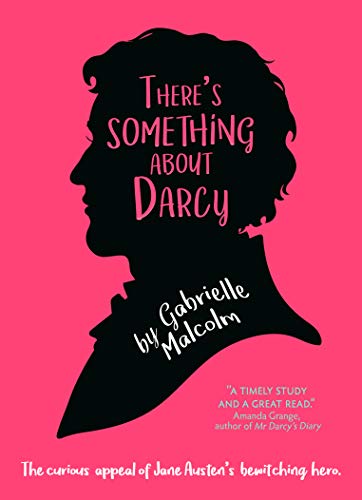
Anyone who have ever read Pride and Prejudice fan fiction or watch the adaptation of Jane Austen's famous masterpiece will certainly know who Mr Fitzwilliam Darcy of Pemberley is. Who wouldn't want him as a husband when he managed to thaw Elizabeth Bennet's heart and sweep off her feet? Of course they are some misunderstandings along the way before they can reach their happy ending. But why does he hold a curious appeal to women who hope to find a man like him. This question and more is answered in Dr Gabrielle Malcom's There's Something about Darcy published just last week. Would you like to know more about this book? Then check out this exclusive excerpt.
Darcy's struggle in the novel is one of trying to resist the charms of a woman of inferior birth and status. At times he grows confident in his power to succeed, only to find it diminish again. This part of the story is Darcy's 'bildungsroman', his narrative of growth — from inexperience to maturity, from ignorance to knowledge. This was a mainstay of the eighteenth century, with Goethe's Werther, Voltaire's Candide (1759) and Laurence Stern's Life and Opinions of Tristram Shandy, Gentleman (1759). All were hugely popular, fashionable and influential, and some had an inflammatory effect on society.
The 'bildungsroman' describes the coming-of-age exploration of the world, with title characters that experience an education and in particular a search — for emotional authenticity, real values and true relationships. Henry Fielding, with Tom Jones (1749) — one of Austen's favourites — and Laurence Stern, for example, examined what it meant to be a gentleman in the modern Enlightenment Age. Was it achieved by birth or behaviour?
Darcy's story, in this light, is one of development and education. We can compare his attitudes and behaviour at the outset of the story, with reference to dancing and accomplishments for example, with the man he becomes by the end. No longer as anxious or tongue-tied, proud or dismissive, he is able to approach Mr Bennet in the inner sanctum of his library to ask for Elizabeth's hand. He remains handsome and rich, but shows he is capable of growth and change and braving social disapproval, particularly from his aunt. Elizabeth is good for him. Some of her defiance has rubbed off on him, and she has helped him to confront and admit to his flaws and do something about them. Their time together at Rosings and Hunsford has been crucial to this, of course.
Dr Malcolm examines Jane Austen's influences in creating Darcy's potent mix of brooding Gothic hero, aristocratic elitist and romantic Regency man of action. She investigates how he paved the way for later characters like Heathcliff, Rochester and even Dracula, and what his impact has been on popular culture over the past two centuries. For twenty-first century readers the world over have their idea of the 'perfect' Darcy in mind when they read the novel and will defend their choice passionately.
In this insightful and entertaining study, every variety of Darcy jostles for attention: vampire Darcy, digital Darcy, Mormon Darcy and gay Darcy. Who does it best and how did a clergyman's daughter from Hampshire create such an enduring character?
A must-read for every Darcy and Jane Austen fan.
Excerpt
The Inner StruggleDarcy's struggle in the novel is one of trying to resist the charms of a woman of inferior birth and status. At times he grows confident in his power to succeed, only to find it diminish again. This part of the story is Darcy's 'bildungsroman', his narrative of growth — from inexperience to maturity, from ignorance to knowledge. This was a mainstay of the eighteenth century, with Goethe's Werther, Voltaire's Candide (1759) and Laurence Stern's Life and Opinions of Tristram Shandy, Gentleman (1759). All were hugely popular, fashionable and influential, and some had an inflammatory effect on society.
The 'bildungsroman' describes the coming-of-age exploration of the world, with title characters that experience an education and in particular a search — for emotional authenticity, real values and true relationships. Henry Fielding, with Tom Jones (1749) — one of Austen's favourites — and Laurence Stern, for example, examined what it meant to be a gentleman in the modern Enlightenment Age. Was it achieved by birth or behaviour?
Darcy's story, in this light, is one of development and education. We can compare his attitudes and behaviour at the outset of the story, with reference to dancing and accomplishments for example, with the man he becomes by the end. No longer as anxious or tongue-tied, proud or dismissive, he is able to approach Mr Bennet in the inner sanctum of his library to ask for Elizabeth's hand. He remains handsome and rich, but shows he is capable of growth and change and braving social disapproval, particularly from his aunt. Elizabeth is good for him. Some of her defiance has rubbed off on him, and she has helped him to confront and admit to his flaws and do something about them. Their time together at Rosings and Hunsford has been crucial to this, of course.
Book Blurb
For some, Colin Firth emerging from a lake in that clinging wet shirt is one of the most iconic moments in television. What is it about the two-hundred-year-old hero that we so ardently admire and love?Dr Malcolm examines Jane Austen's influences in creating Darcy's potent mix of brooding Gothic hero, aristocratic elitist and romantic Regency man of action. She investigates how he paved the way for later characters like Heathcliff, Rochester and even Dracula, and what his impact has been on popular culture over the past two centuries. For twenty-first century readers the world over have their idea of the 'perfect' Darcy in mind when they read the novel and will defend their choice passionately.
In this insightful and entertaining study, every variety of Darcy jostles for attention: vampire Darcy, digital Darcy, Mormon Darcy and gay Darcy. Who does it best and how did a clergyman's daughter from Hampshire create such an enduring character?
A must-read for every Darcy and Jane Austen fan.
Book Link
Kindle
Author Bio
Dr. Gabrielle Malcolm lectures and writes about Jane Austen in popular culture and the global fan phenomena surrounding Austen's work. She is the author of Fan Phenomena: Jane Austen and is a regular speaker at the annual Jane Austen Festival in Bath, and the Jane Austen Regency Week in Chawton. She lives in Bath.
Blog Tour Schedule
You are welcome to join the blog tour listed below where you can read more excerpts, interview with the author and find out what other reviewers are saying about this must have book.


Comments
Post a Comment
My idea of good company, is the company of clever, well-informed people, who have a great deal of conversation; that is what I call good company.
Would you like to have a share of the conversation? Or found any mistakes that need correcting? It would be very much appreciated if you leave a comment. Thank you for taking the time to visit My Love for Jane Austen.